

Key Takeaways
- Understanding English and speaking English are different skills.
- Most learners face english speaking hesitation because they lack real conversation practice.
- Fear and overthinking reduce fluency.
- Translation from Hindi to English slows speaking speed.
- Daily speaking improves confidence faster than grammar memorisation.
- 1:1 live coaching helps learners speak naturally without pressure.
- Consistency matters more than perfection.
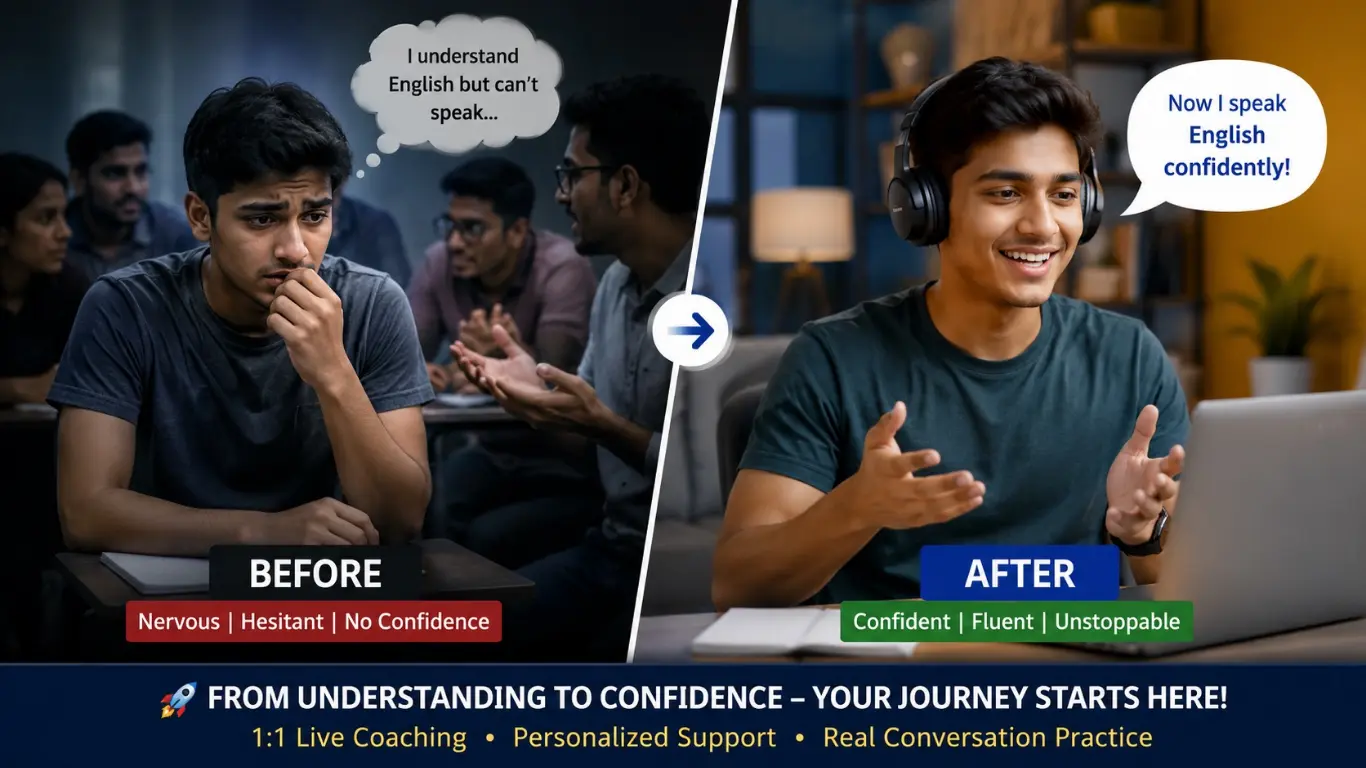
Many learners say, “I understand English very well, but when I try to speak, I become blank.” If this sounds familiar, you are not alone. Millions of students, job seekers, working professionals, homemakers, and even graduates face the same issue.
The problem of understand english but cannot speak is one of the biggest communication struggles in India today. You may understand:
- English movies
- YouTube videos
- Office meetings
- Interviews
- Social media content
But when it is time to speak, hesitation starts.
Some people fear grammar mistakes. Some feel nervous in front of others. Others translate from Hindi to English in their minds and become slow while speaking.
The good news is this problem can improve with the right speaking practice, confidence-building method, and real communication training.
At Spoken Mentor, learners improve through practical 1:1 live communication practice instead of theory-heavy classroom learning. Our online spoken English classes focus on building confidence, fluency, and real-life speaking skills through personalised mentor support.
Why Do I Understand English But Cannot Speak?

The biggest reason is simple.
Your brain learned English passively, not actively.
Most schools teach:
- Grammar rules
- Writing answers
- Reading comprehension
- Memorization
But fluent communication needs:
- Fast thinking
- Real conversations
- Pronunciation correction
- Confidence training
- Speaking practice
This is why many learners understand English but cannot talk in English confidently.
Understand English But Cannot Speak: The Psychology Behind It
Many learners think they have weak English.
Actually, the problem is usually psychological, not intellectual.
Your mind creates pressure during conversations:
- “What if I make mistakes?”
- “What if people laugh?”
- “What if my grammar is wrong?”
- “What if I forget words?”
This fear creates hesitation.
Spoken Mentor focuses heavily on confidence-first learning because fear reduction matters before fluency growth.
Improve Your Confidence With Spoken Mentor
If you understand English but hesitate while speaking, Spoken Mentor can help you improve through:
- 1:1 live online coaching
- Confidence-focused communication training
- Real conversation practice
- Beginner-friendly learning
- Flexible class timings
You can book your free assessment session here:
Book a Free Demo Class Now.
Common Reasons Behind English Speaking Hesitation
1. Fear of Speaking English Publicly
The fear of speaking english is one of the biggest fluency blockers.
Many learners stay silent because they fear embarrassment.
But fluency grows only through speaking practice.
Every fluent English speaker once spoke broken English.
2. Translation Habit

Many people think in Hindi first and then translate into English.
Example:
“Main market ja raha hoon”
→ mental translation
→ “I am going to the market.”
This creates delays.
Fluent speakers think directly in English instead of translating.
3. Lack of Real Speaking Practice
Watching videos alone cannot build speaking confidence.
Speaking improves only when you:
- Talk regularly
- Make mistakes
- Receive corrections
- Practice conversations
This is why practical conversation training matters more than passive learning.
4. Over-Focus on Grammar
Grammar is useful, but fluency requires communication first.
Many learners stop mid-sentence because they mentally check:
- Tenses
- Articles
- Vocabulary
- Sentence structure
This breaks confidence and speaking flow.
5. No English-Speaking Environment
Many learners do not have anyone to practice with daily.
This slows improvement.
That is why many learners now prefer Best English Speaking Course with Flexible Timing (2026 Guide) and live online speaking sessions.
Why I Cannot Speak English Fluently After Years of Study?
This is one of the most searched questions online.
The answer is simple:
Traditional education trains memory, not communication.
Students spend years:
- Writing exam answers
- Memorising grammar rules
- Learning textbook English
But they rarely practice:
- Real conversations
- Interview communication
- Public speaking
- Daily English usage
As a result, learners gain knowledge but not fluency.
Signs You Are Facing This Speaking Problem
You may relate to these situations:
- You understand English movies but cannot reply confidently.
- You avoid speaking during meetings.
- You feel nervous during interviews.
- You know answers but cannot express them clearly.
- You speak English only inside your mind.
- You fear pronunciation mistakes.
- You hesitate while talking to fluent speakers.
This does not mean you are weak in English.
It simply means your speaking confidence needs training.
Understanding vs Speaking English: The Real Difference
| Skill | Understanding English | Speaking English |
| Type | Passive Skill | Active Skill |
| Pressure | Low | High |
| Speed Needed | Moderate | Fast |
| Confidence Needed | Medium | Very High |
| Practice Method | Reading & Listening | Real Conversations |
| Fear Factor | Low | High |
This explains why someone may understand English very well but still struggle to speak fluently.
How to Improve English Speaking Fluency Faster

1. Start Thinking in English
This is one of the fastest fluency-building methods.
Instead of translating:
- Think directly in English
- Describe daily activities mentally
- Create small English thoughts
Example:
- “I am drinking tea.”
- “I need to finish my work.”
- “I have a meeting tomorrow.”
This improves speaking speed naturally.
2. Speak Daily Without Fear
Speaking confidence improves through repetition.
Even 15–20 minutes daily can create visible progress.
You can:
- Talk to yourself
- Practice mirror speaking
- Join speaking communities
- Record your voice
- Speak with mentors
3. Learn Practical Spoken English
Many learners focus too much on difficult vocabulary.
Real communication mostly uses simple daily English.
Focus on:
- Daily-use sentences
- Workplace communication
- Interview answers
- Conversation starters
You can compare different training options here:
Compare All Spoken English Courses.
4. Improve Listening Along With Speaking
Listening improves:
- Pronunciation
- Sentence flow
- Accent understanding
- Speaking rhythm
Listen actively instead of passively.
Notice:
- How fluent speakers form sentences
- Common phrases
- Speaking speed
- Word stress
5. Stop Waiting for Perfect English
Many learners delay speaking because they want perfect grammar first.
But fluency grows through usage.
Simple English spoken confidently is far better than perfect grammar spoken nervously.
Modern Spoken English Learning vs Traditional Learning

| Traditional Learning | Modern Spoken English Learning |
| Grammar-heavy | Conversation-focused |
| Large classroom batches | Personalized 1:1 coaching |
| Memorization | Real speaking practice |
| Fear-based correction | Confidence building |
| Theory-first | Communication-first |
| Passive learning | Interactive learning |
This is why many learners now prefer Best English Speaking Course Online in India (2026) options with live speaking support.
Best Daily Routine to Speak English Confidently
Morning
- Listen to English audio for 10 minutes
- Read simple English sentences aloud
Afternoon
- Think in English during daily activities
Evening
- Practice speaking for 20 minutes
- Record your voice
Night
- Learn 5 practical daily-use phrases
- Revise speaking mistakes
Small daily improvements create long-term fluency.
Can Spoken English Courses Really Help?
Yes — but only if the course focuses on speaking practice, not just theory.
A good spoken English course should include:
- Live communication practice
- Trainer feedback
- Confidence improvement
- Interview speaking
- Real-life communication
- Practical corrections
Spoken Mentor follows a learner-first model where learners practice real English conversations instead of only watching recorded lessons.
Learners looking for career-focused communication can also read:
Spoken English Course for Career Growth (Get Promotion Faster).
Real-Life Benefits of Speaking English Fluently

Better Job Opportunities
Good communication improves:
- Interview performance
- Workplace confidence
- Promotion chances
- Client communication
Many learners preparing for jobs also explore:
Best English Course for Job Interviews.
Higher Confidence in Public
Fluent communication helps during:
- Meetings
- Group discussions
- Networking
- Presentations
Better Global Communication
English helps connect with people worldwide through:
- Remote jobs
- International business
- Freelancing
- Online learning
Stronger Personal Growth
Speaking confidently improves:
- Self-image
- Social comfort
- Leadership ability
- Communication confidence
Ready to Speak English Confidently?
Stop staying silent during conversations, meetings, and interviews. Spoken Mentor helps learners speak English naturally through:
- 1:1 live coaching
- Practical speaking practice
- Personalised mentor support
- Confidence-first learning
👉 Book your free 1:1 spoken English demo class
Mistakes to Avoid While Learning Spoken English
Avoid Comparing Yourself to Fluent Speakers
Every learner improves at a different pace.
Avoid Passive Learning Only
Watching videos alone is not enough.
You must speak regularly.
Avoid Fear-Based Practice
Fear slows fluency growth.
Confidence improves when learners speak without judgment.
Avoid Memorising Difficult Vocabulary
Simple communication English works better in daily life.
Actionable Tips to Speak English Confidently
- Speak daily for at least 15 minutes
- Think directly in English
- Use simple sentences first
- Record your voice regularly
- Practice with mentors
- Improve listening skills
- Focus on communication over perfection
- Join live speaking sessions
- Learn practical phrases
- Stay consistent
Why Spoken Mentor Is Different

Spoken Mentor focuses on confidence before fluency.
Unlike traditional classroom models:
- No crowded batches
- No recorded-only learning
- No unnecessary grammar overload
Instead, learners receive:
- 1:1 live coaching
- Personalized support
- Fear-reduction training
- Practical speaking correction
- Flexible upgrades
Explore our online spoken English courses for beginners, students, professionals, and job seekers.
Final Thoughts
The problem of understand english but cannot speak is extremely common.
It does not mean you are weak in English.
It simply means your speaking confidence and communication habits need practical training.
Fluent communication improves when learners:
- Speak regularly
- Think directly in English
- Stop fearing mistakes
- Practice real conversations
- Learn in a supportive environment
Confidence grows gradually through consistent speaking practice.

Ready to speak English confidently without fear or hesitation?
Spoken Mentor helps learners improve through:
- 1:1 live spoken English coaching
- Confidence-first communication training
- Personalised mentor support
- Flexible online classes
- Real-life conversation practice
Start improving today:
- Explore the Spoken Mentor website
- View all online English speaking courses
- Book your free 1:1 spoken English demo class
- WhatsApp Support: +91 8882821739
❓ Frequently Asked Questions (FAQs)
1. Why do I understand English but cannot speak fluently?
Many learners understand English through reading and listening but struggle to speak because they lack real conversation practice and confidence. Spoken Mentor helps learners improve through 1:1 live spoken English coaching focused on communication, fluency, and fear reduction.
2. How can I remove english speaking hesitation?
You can reduce english speaking hesitation by practising daily conversations, thinking directly in English, improving listening skills, and speaking without fear of mistakes. Regular live speaking practice improves confidence faster.
3. Can I become fluent in English without perfect grammar?
Yes. Fluent communication is more about confidence, speaking practice, and sentence flow than perfect grammar. Many fluent speakers improve grammar naturally while practising real conversations.
4. Which is the best way to improve spoken English at home?
The best way is to combine daily speaking practice, listening exercises, mirror speaking, and live communication sessions with mentors. Online spoken English classes with practical conversation training can improve fluency faster.
5. How long does it take to speak English confidently?
The timeline depends on consistency, speaking practice, and learning methods. Many learners notice visible confidence improvement within 30 to 90 days of regular spoken English practice and live communication training.
