

Key Takeaways
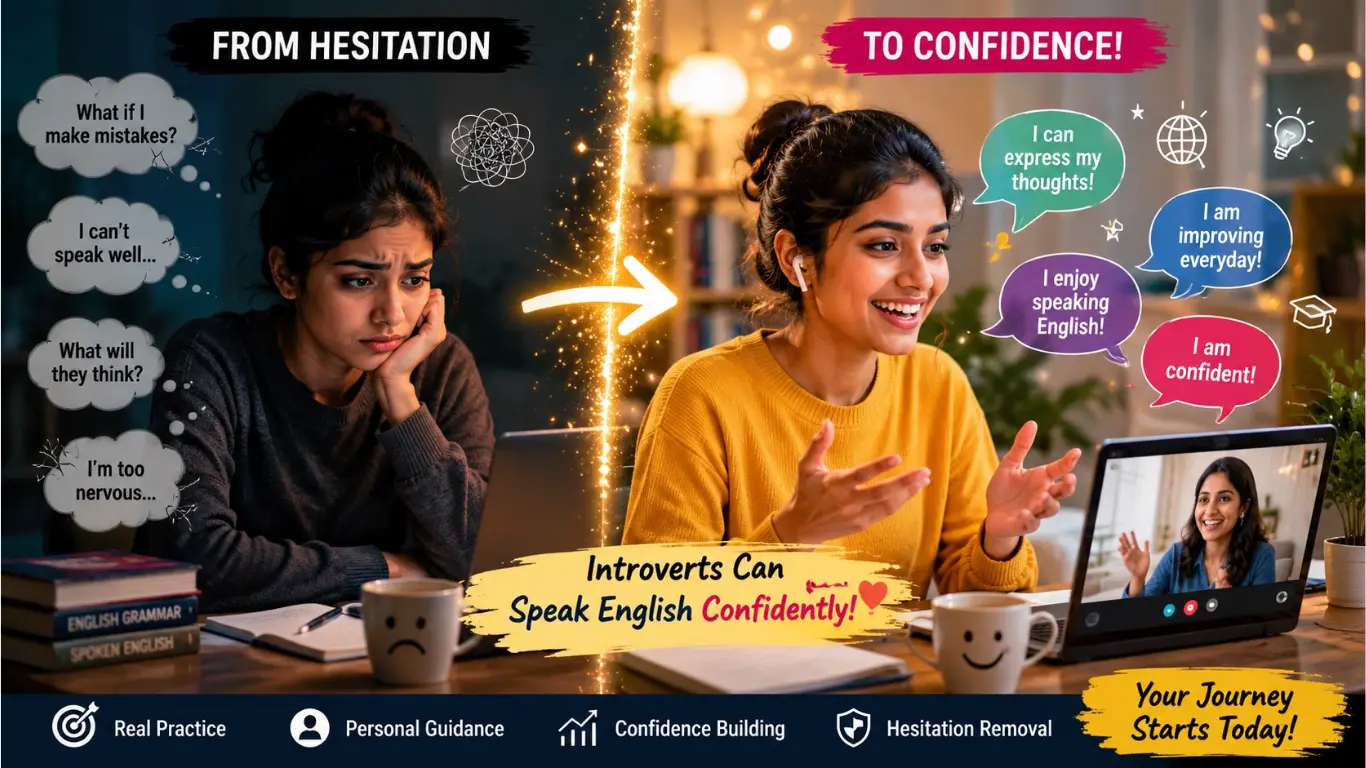
- Introverts can become fluent and confident English speakers.
- Fear and hesitation are bigger problems than grammar mistakes.
- 1:1 communication practice works well for shy learners.
- Confidence improves through regular speaking practice.
- Overthinking slows communication speed.
- Real conversations improve fluency faster than grammar memorisation.
- Comfortable learning environments reduce speaking anxiety.
- Confidence building english practice helps learners speak naturally.
Many introverts understand English very well but hesitate while speaking. They can read English articles, watch English videos, and understand conversations easily. However, when they need to speak English in interviews, meetings, classrooms, or daily conversations, they suddenly become nervous or silent.
This is a very common problem among students, working professionals, job seekers, and beginners.
The real problem is usually not grammar or vocabulary. In most cases, the issue is:
- Fear of judgment
- Hesitation
- Overthinking
- Lack of speaking practice
- Low confidence
This is why introvert english speaking improvement needs a confidence-first learning approach instead of traditional grammar-heavy methods.

At Spoken Mentor, many introvert learners improve their communication skills through 1:1 live online spoken English coaching focused on confidence building, hesitation removal, and real conversation practice.
The good news is simple:
Introverts can become highly confident English speakers with the right practice method.
Why Introverts Struggle While Speaking English
Many introverts naturally think deeply before speaking. Because of this, they mentally analyse:
- Grammar
- Vocabulary
- Pronunciation
- Sentence structure
- Other people’s reactions
As a result, communication becomes stressful.
Many shy learners also fear:
- Making mistakes
- Speaking slowly
- Forgetting words
- Looking less confident
- Being judged by others
This creates hesitation.
Over time, hesitation becomes a communication habit.
Introvert English Speaking Problems Most Learners Face
Fear of Speaking in Front of Others
Many introverts feel uncomfortable speaking English in groups because they fear embarrassment or negative judgment.
Even if they know the answer, they may stay silent.
This problem becomes stronger during:
- Interviews
- Meetings
- Classroom discussions
- Public speaking situations
Overthinking Every Sentence

Introverts often try to create perfect sentences before speaking.
However, spoken English does not require perfection.
Real communication requires:
- Clarity
- Confidence
- Natural speaking
Overthinking causes:
- Long pauses
- Nervousness
- Slow communication
- Blank mind situations
Lack of Real Speaking Practice
Many shy learners avoid conversations because they feel nervous.
As a result:
- Confidence becomes lower
- Fear becomes stronger
- Fluency improves slowly
Speaking confidence only improves through regular communication practice.
Group Class Pressure
Traditional classroom learning often feels stressful for introverts because:
- Faster learners dominate discussions
- Speaking opportunities become limited
- Public mistakes increase fear
- Trainers cannot focus personally
Because of this, many introverts improve better in personalised speaking environments.
Can Introverts Become Fluent English Speakers?
Yes, absolutely.
Being introverted does not mean you cannot speak English confidently.
Introversion simply means:
- You prefer calm communication
- You think carefully before speaking
- You feel mentally tired in highly social situations
It does NOT mean:
- You cannot become fluent
- You are bad at communication
- You cannot improve confidence
In fact, many introverts become excellent communicators because they:
- Listen carefully
- Observe conversations deeply
- Think clearly
- Choose words thoughtfully
With regular speaking practice, introverts often become strong and confident speakers.
Why Traditional Spoken English Classes Often Fail Introverts
Many traditional spoken English classes focus heavily on:
- Grammar memorisation
- Group speaking activities
- Classroom participation
- Theory-based learning
- Public speaking pressure
This learning method often increases anxiety for introverts.
As a result:
- Fear becomes stronger
- Confidence becomes lower
- Communication hesitation increases
Modern spoken English learning works differently.
Instead of focusing only on grammar, modern learning focuses on:
- Confidence building english methods
- Practical communication
- Live interaction
- Hesitation removal english practice
- Real-life conversations
This approach helps introverts improve naturally.
You can also read: Why Confidence Is More Important Than Grammar in Spoken English
The Best Learning Method for Introvert English Speaking
Today, many learners improve faster through:
- 1:1 live coaching
- Personal mentorship
- Practical speaking sessions
- Real conversation practice
- Fear reduction techniques
At Spoken Mentor, learners practice spoken English in supportive one-on-one sessions designed especially for hesitant speakers.
Instead of forcing learners into uncomfortable communication situations, the training focuses on:
- Comfortable communication
- Slow confidence growth
- Real speaking practice
- Natural correction methods
As a result, learners improve without pressure.
If you are looking for personalised speaking practice, explore this best online English speaking course with personal trainer.
Introvert English Speaking vs Extrovert Communication Style
| Feature | Introvert Learners | Extrovert Learners |
| Speaking Style | Thoughtful and careful | Fast and spontaneous |
| Learning Preference | Calm personal learning | Group interaction |
| Fear Level | Higher hesitation | Lower hesitation |
| Best Learning Method | 1:1 speaking practice | Group discussions |
| Communication Growth | Stable and deep | Faster but less structured |
| Confidence Building | Gradual improvement | Public participation |
This comparison clearly shows that introverts simply need a different learning environment — not less ability.
Why Confidence Matters More Than Personality
Many shy learners believe:
“I am introverted, so I cannot speak confidently.”
This is not true.
Confidence is a skill.
It improves through:
- Practice
- Repetition
- Comfortable communication
- Positive speaking experiences
Even naturally shy people improve greatly when fear starts reducing.
If hesitation and confidence are stopping your fluency, read: Why Do I Understand English But Cannot Speak Fluently?
Best Ways Introverts Can Speak English Confidently
Start with Small Conversations
Do not pressure yourself to speak perfectly immediately.
Start with:
- Introductions
- Daily routine conversations
- Small questions
- Short discussions
Small communication practice builds confidence gradually.
Practice in Private First
Many introverts feel more comfortable practicing alone initially.
Try:
- Speaking in front of a mirror
- Recording your voice
- Reading English aloud
- Talking to yourself in English
This reduces nervousness slowly.
Stop Trying to Sound Perfect
Perfection creates pressure.
Instead:
- Focus on communication
- Speak naturally
- Continue conversations
- Accept small mistakes
People care more about understanding your message than perfect grammar.
Use Simple English
Simple English creates better communication than difficult vocabulary.
For example:
- “I understand.”
- “Can you help me?”
- “I am improving my English.”
- “I feel nervous while speaking.”
Simple speaking creates natural fluency faster.
Hesitation Removal English Practice for Introverts
Hesitation develops because of:
- Fear
- Lack of confidence
- Lack of practice
- Negative communication experiences
Therefore, hesitation removal english practice should focus on:
- Comfortable speaking
- Repeated conversations
- Positive communication experiences
- Confidence building
This is why personal mentorship helps many introverts improve faster.
If you mentally translate Hindi into English while speaking, read this guide on how to stop translating Hindi to English while speaking.
Why 1:1 Coaching Works Better for Introverts
Many introverts improve faster in 1:1 speaking sessions because:
- Fear becomes lower
- Communication feels safer
- Speaking time increases
- Trainers focus personally
- Hesitation reduces naturally
This creates faster confidence improvement.
At Spoken Mentor, introvert learners receive:
- Personal mentorship
- Live speaking practice
- Real conversation training
- Confidence building english support
- Fear-free learning methods
Ready to Speak English Without Fear?
If you are shy or introverted, you do not need to force yourself into uncomfortable classroom environments.
Confidence improves gradually when learning feels comfortable and supportive.
At Spoken Mentor, learners improve through:
- 1:1 live spoken English coaching
- Practical conversation training
- Hesitation reduction methods
- Confidence-first learning
- Beginner-friendly communication support
👉 Book Your FREE 1:1 Spoken English Demo
📞 WhatsApp Support: +91-8882821739
Real-Life Benefits of English Speaking for Introverts
Better Interview Performance
Many introverts know answers during interviews but struggle because of nervousness.
Communication confidence improves:
- Speaking clarity
- Self-expression
- Professional image
- Interview comfort
If interviews make you nervous, read: Why You Freeze While Speaking English in Interviews
Career Growth
Professionals with better communication confidence often:
- Participate more actively
- Handle meetings effectively
- Build stronger workplace relationships
- Receive better opportunities
Better Social Confidence
English communication confidence improves:
- Networking
- Travel communication
- Daily conversations
- Public comfort
Higher Self-Confidence
As communication improves:
- Fear reduces
- Anxiety becomes lower
- Self-confidence improves
- Communication becomes easier
This positively affects personal and professional life.
How to Choose the Right Spoken English Course for Introverts
Before joining a spoken English course, introverts should check these important points carefully.
Does the Course Focus on Speaking Practice?
Avoid courses focused only on theory and grammar memorisation.
Choose programs with:
- Live conversations
- Communication practice
- Practical speaking sessions
Are Classes Live or Recorded?
Recorded videos cannot improve communication confidence effectively.
Live interaction improves speaking ability much faster.
Is Personal Attention Available?
Introverts often improve better through personal mentorship and 1:1 communication support.
Is the Learning Environment Comfortable?
Supportive learning environments reduce fear and hesitation faster.
If you are searching for beginner-friendly communication training, explore this best English speaking course for beginners.
Why Spoken Mentor Is Helpful for Introvert Learners
Spoken Mentor focuses on:
- Confidence before perfection
- Practical communication
- Real speaking practice
- Fear reduction
- Personal mentorship
The platform helps:
- Students
- Beginners
- Working professionals
- Homemakers
- Job seekers
- Shy learners
Through:
- 1:1 live coaching
- Flexible learning
- Practical spoken English sessions
- Confidence-building methods
This learning style works especially well for introverts because it removes unnecessary pressure.
Final Thoughts
Introversion is not a weakness in spoken English learning.
Many introverts become excellent communicators once they practice regularly in supportive environments.
The real goal is not becoming louder.
The real goal is becoming comfortable while speaking English.
Confidence improves gradually through:
- Real conversations
- Regular speaking practice
- Positive communication experiences
- Personal mentorship
Therefore, do not wait for perfect confidence before speaking.
Start with small conversations.
Practice daily.
Allow yourself to improve naturally.
Over time, fluency and confidence will improve together.
Start Your Spoken English Confidence Journey Today
If you want to:
- Speak English confidently
- Reduce hesitation
- Improve fluency naturally
- Perform better in interviews
- Communicate comfortably in daily life
Then confidence-focused spoken English coaching can help you greatly.
At Spoken Mentor, learners improve through:
- 1:1 live spoken English coaching
- Practical communication sessions
- Real conversation practice
- Confidence-building methods
- Fear-free learning support
👉 Compare All English Speaking Courses
👉 Schedule Your FREE Demo Class Today
📞 Call or WhatsApp: +91-8882821739
